Glomak Sazeh Company (one of the subsidiary companies of Jihad Nasr Kerman) with several years of experience in the field of civil and construction projects, now with a semi-automatic emulsion production unit, has the ability to design and produce a variety of emulsion bitumen compatible with the consumables of road construction projects. The company’s emulsion bitumen production unit consists of an emulsin plant with a capacity of 10 tons per hour and separate storage tanks with a total capacity of 150 tons.
- : +9834-32515993
- Golomaksaze@gmail.com

Bitumen Emulsion
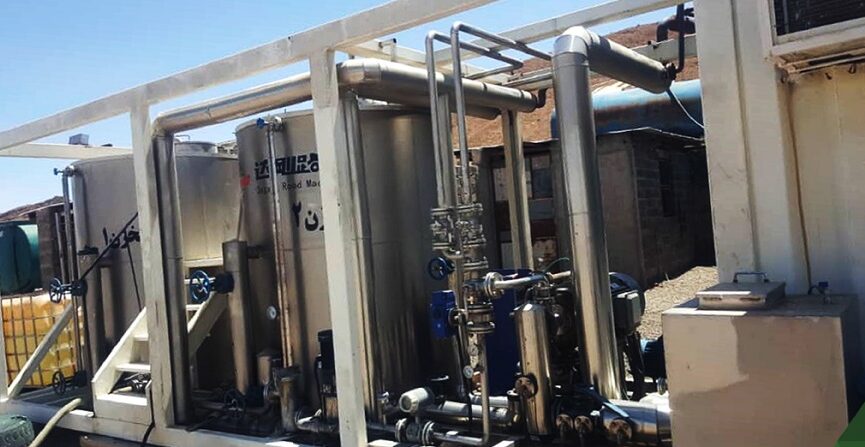
n addition to producing a variety of simple emulsion bitumens, this unit is capable of producing polymer emulsions. Currently, due to the wide range of cationic emulsifiers, different types of cationic emulsions are produced in this unit.
- Simple and polymer quick-breaking carton emulsions for single coat and chip applications
- Simple and polymeric cationic emission cations for Fog Flood and cold asphalt applications
- Simple and polymer late cation emission cations for prime coat applications and cold asphalt
- Simple and polymer fast cation emission cations for flood and microfluorescence slurry applications
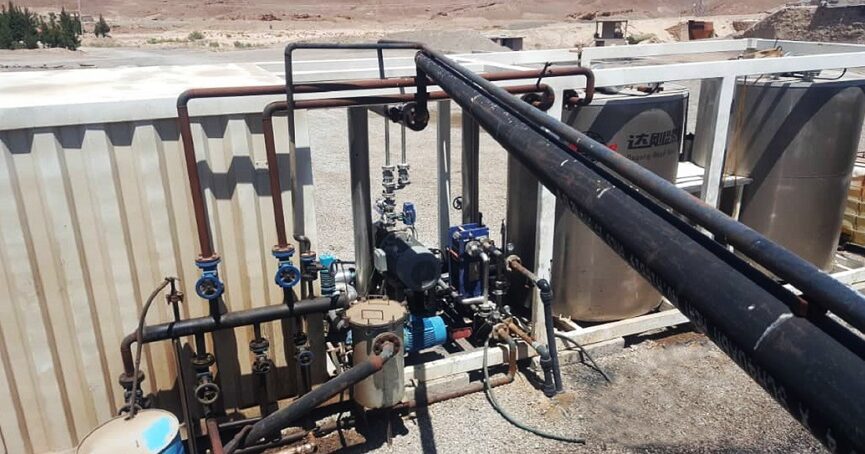
Emulsion Plant
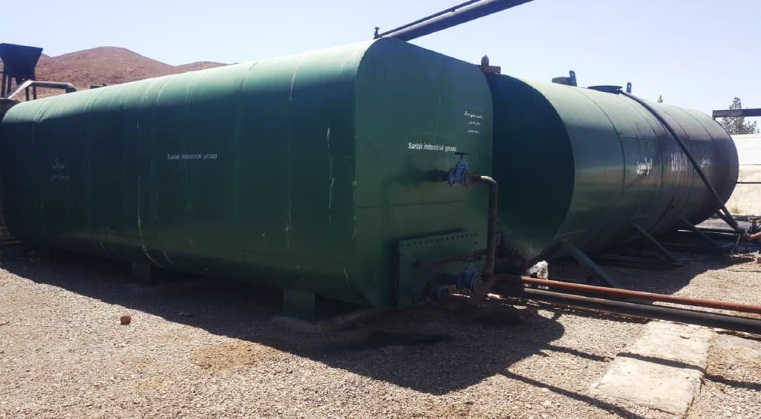
Seperate Storage Tanks
Emulsion
Emulsion bitumen consists of three main components, including water, bitumen and emulsifier, but in some cases it contains other additives such as stabilizers and acidity regulators, and the viscosity of disinfectants and fracture control materials. During production, the components of the emulsion are divided into two parts: bitumen phase and water phase. The bitumen phase consists of bitumen and the water phase consists of water, emulsifier, acid and sometimes salt.
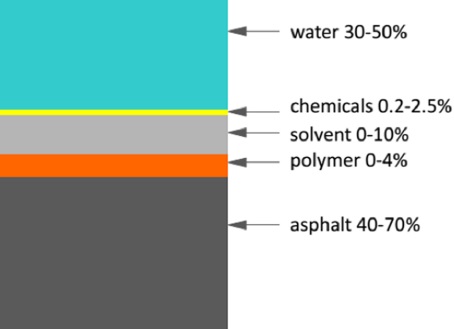
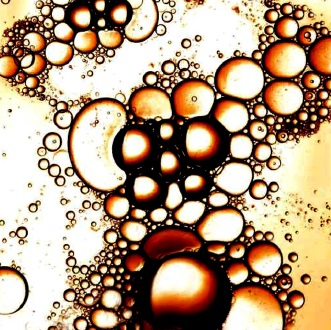
To produce emulsions, the bituminous phase and the blue phase pass through the colloidal mill and the bitumen grains are suspended in a continuous phase of water at a size of less than 10 microns. The Internet is stabilized by an emulsifier or emulsifier. By creating an polar environment, it prevents the bitumen particles from sticking to each other and separating the bituminous phase of the aqueous phase. Emulsifier is a surfactant that keeps bitumen particles suspended in water and controls the emulsion’s failure time. Emulsion bitumens generally contain 0.1 to 2% emulsifier, and their properties largely depend on the chemical formula of the emulsifier. In terms of failure rate, emulsions are classified into fast-breaking, fast-breaking, and fast-breaking types, in terms of electric charge and cationic, anionic, and non-ionic types, each produced by different emulsifiers. The rate of emulsion failure decreases with increasing amount of emulsifier material used in its production.
Applications for Bitumen Emulsion
Tack Coat
Prime Coat
Fog Seal
Cheap Seal
Cold Asphalt
Slurry Seal
Micro Surfacing
Mulching Operation
Tack Coat
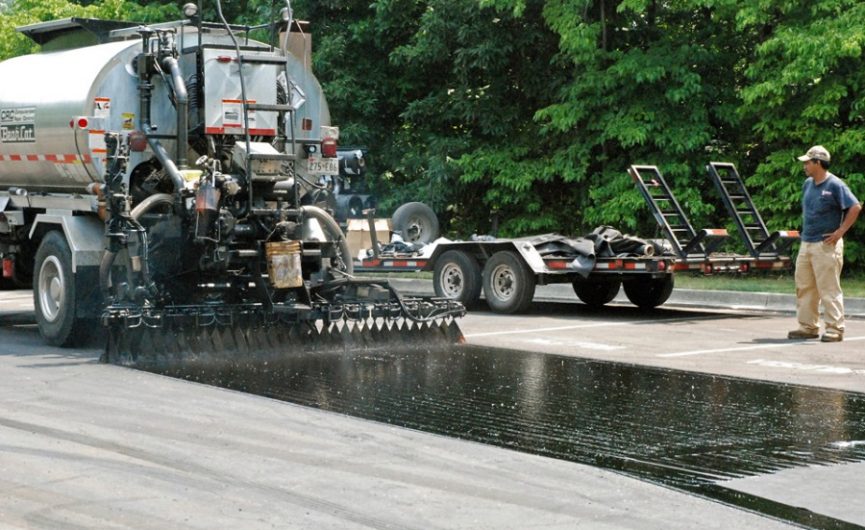
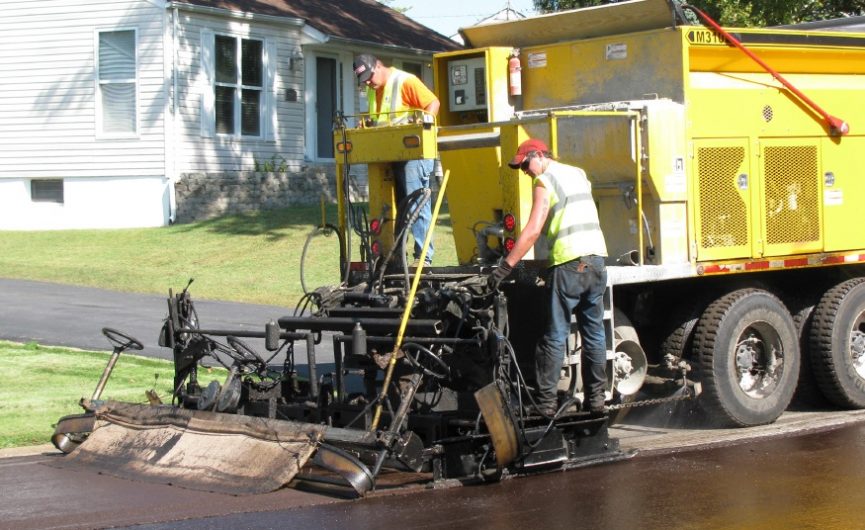
A single spread coat is a specific amount of bitumen on a relatively non-absorbent pavement surface that is applied to bond the existing surface and the new coating. A single coat is used to create the bond between the asphalt layers.
Single coat emulsion is generally sprayed at 250 to 500 grams per square meter on surfaces with different specifications. Usually, SRS1 emulsion is produced for use in single coat.

Prime Coat
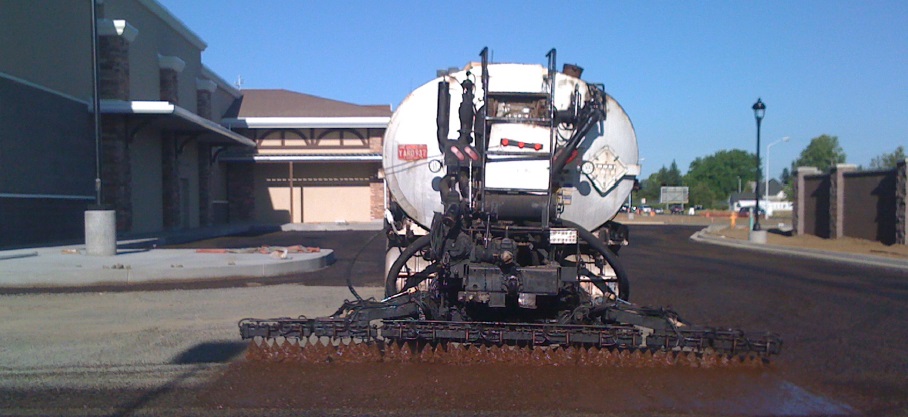
Prime Coat has a certain amount of emulsion bitumen on the adsorbent surface that is applied to penetrate the surface, stabilize the surface and the adhesion between it and the next layer.
Prime Coat is generally applied to create a bituminous layer to seal the base layer under the foundation and bed and prevents water from penetrating the lower layers. Prime coat increases the stability of the soil layer and prevents the separation of fine materials from the surface of the base layer by wind and rain. Also, the adhesion of the asphalt surface increases the base layer and prevents the thin asphalt layers on the base from slipping. Delayed cationic and anionic emulsions and the minimum amount of standard bitumen to be used as a primer coat must be high in solvent to be used without dilution and penetrate sufficiently. The emulsion consumption is recommended for prime coat is about 1.5 to 2.5 liters per square meter. The amount and size of empty spaces in the substrate material affects the permeability of the emulsion, and the type of emulsion determines the amount of section and the amount of dilution.
CSS 1 emulsion is usually produced for use in coat premiums.
Fog Seal
Fog Seal is a layer of emulsion bitumen that is sprayed on the surface and is mainly used on the existing pavement to seal small cracks, reduce bareness and improve the pavement conditions. Fog Seal is used to refresh old, dry and brittle asphalt to fill very small cracks and pavement surface cavities.
The amount of Fog Seal spread in the range of 0.45 to 0.7 liters per square meter is recommended for diluted emulsion. The surface texture of the rough pavement and the amount of cracks have an effect on the consumption of Fag Seal.
Diluted CMS 1 emulsion is commonly used for Fog Seal.
Cheap Seal(Seal Coat)
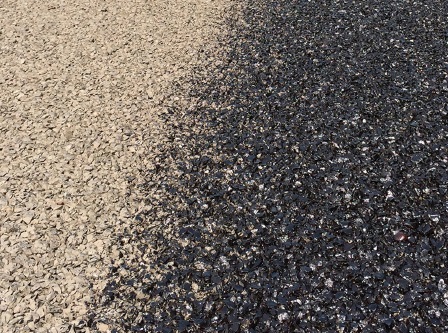
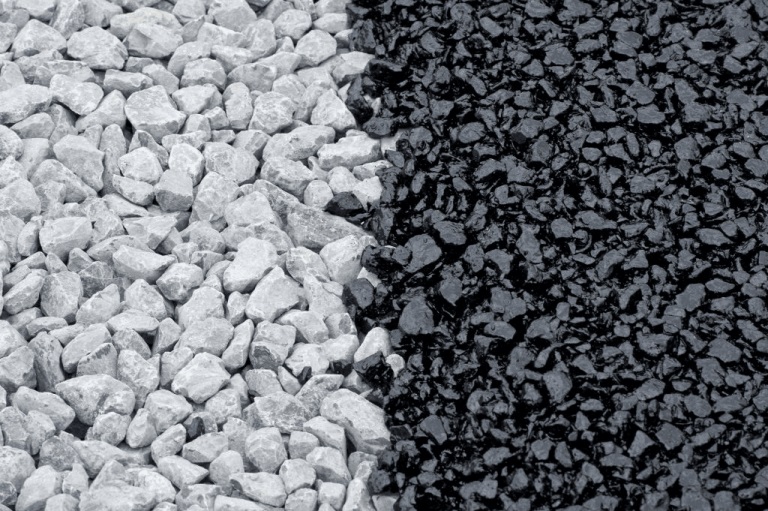
Cheap Seal is a bitumen spread on the prepared surface of asphalt sand and road concrete, on which broken and clean aggregates with the same size are immediately spread. Cheap Seal can be applied in one layer or several layers. Cheap Seal is used as a temporary pre-asphalt pavement to repair oxidation and sanding of old pavement and to create a suitable sealing surface and slip resistance. Anionic and cationic fracture emulsions with 60 to 75% bitumen are used to make Cheap Seal, and polymer bitumens are commonly used. The emulsion must have sufficient viscosity to provide the required bitumen thickness without flowing, which can be achieved by adjusting the amount of emulsion bitumen or by selecting the appropriate emulsifier. The emulsifier used has an effect on emulsion production and the final adhesion of aggregates and bitumen, and if necessary, an emulsion adhesion enhancer should be used.
CRS1 emulsion is usually used for Cheap Seal.
Cold Asphalt
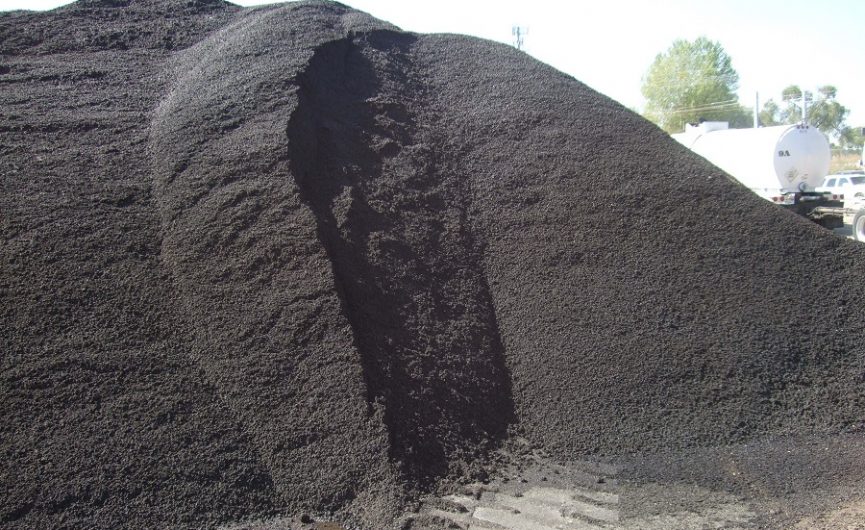
Cold asphalt is a cost-effective alternative to hot asphalt, especially in areas that are as long as the nearest hot asphalt plant. Using cold asphalt is also a good solution for staining and small asphalt projects. Despite being used in cold asphalt structures, it can be used in low thicknesses for surface repair of pavements. Cold asphalt can be used after a short time of production or after a few days of storage. It is usually prepared with a late-breaking cationic emulsion or a slow-breaking emulsion containing 60 to 65% bitumen and a small amount of solvent. The empty space of this type of asphalt is about 4 to 8% immediately after spreading and compaction, and cement is used to adjust the failure rate and improve its adhesion. Cold asphalt is prepared by open granulation with a strong solvent emulsion to delay the setting time and stone materials with a value of less than 2% of particles smaller than sieve 200. This type of asphalt is used in the implementation of the base and asphalt layer of traffic routes, staining, surface repair, cross-section correction and road shoulder repair. The empty space of this type of asphalt is about 15 to 20% immediately after distribution and density. In this asphalt, cationic and anionic breaker emulsion is used with 5 to 15% solvent, and the higher the solvent content, the longer the storage time. Cold sand asphalt, which is produced by mixing wind or gravel sand with uniform granulation and emulsion bitumen, has a good performance as a base and sub-base layer material. For this cold asphalt, a late floating or slow-floating emulsion (HF extension) is generally used, which is used in the production of bitumen (from the category with H extension).
Slurry Seal
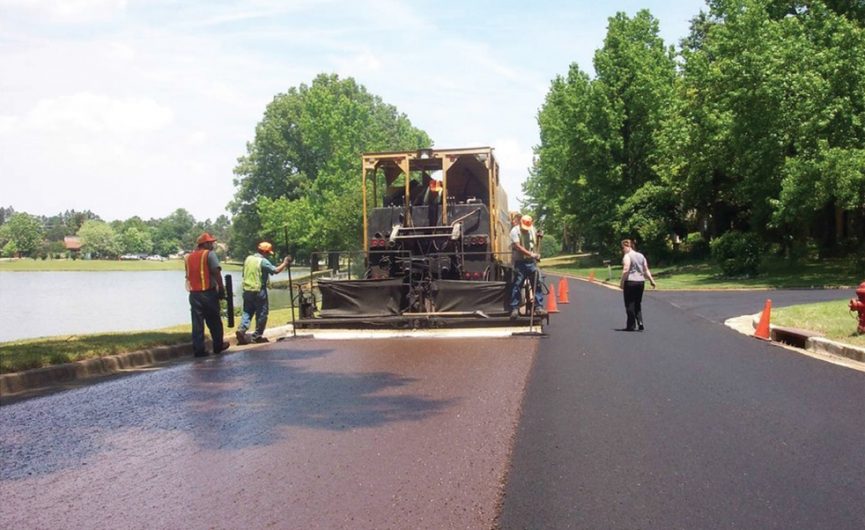
Slurry Seal is a mixture of emulsion and stone materials with fine granulation and is considered as an integrated sealing method of existing pavement, which is both a preventive method and a restorative method. Slurry Seal is a very effective maintenance method for long life procedures that can fill small surface cracks and prevent sanding of road surface and aggregate detachment and increase slip resistance and damage due to water and Sadr oxidation. Reduce the level and ultimately increase the service life of pavement. Slurry Seal is performed with aggregates with a maximum size of 3 to 10 mm. The emulsion used in Slurry Seal can be of the type of cationic and anionic emitters. Emulsion with faster failure is used to quickly reopen the road and pass traffic. Slurry Seal emulsions can contain natural latex, SBR or other polymers.
Micro Surfacing
Microsurfacing is a cold thin asphalt material composed of continuous grains of stone with a maximum size of 6 to 10 mm of active filler (cement), water, fracture control additives and modified polymer cationic emulsions and is used for pavement repair and maintenance.This mixture reaches its initial setting 15 to 30 minutes after its application, and after one hour, the traffic can be passed over it. The method of application is similar to that of a Slurry seal, except that in Microsurfacing, coarse-grained aggregates are used, and its emulsion is a polymer in which chemical failure occurs. Microsurfacing is carried out at the project site using a special machine. The Microsurfacing emulsion is a fast-breaking, polymer-modified cationic cation that is commonly used as a natural latex, but other polymers such as SBS and SBR can also be used. A minimum solid polymer distribution of 3% is recommended for emulsion bitumen.
Mulching operation
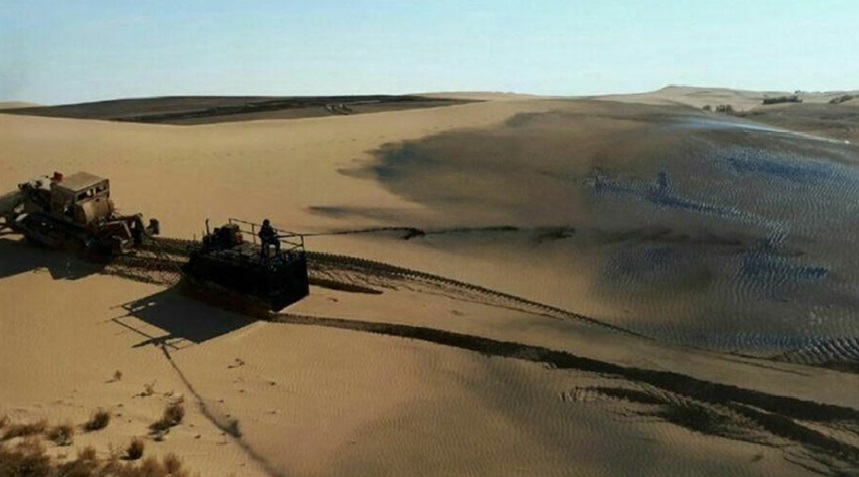
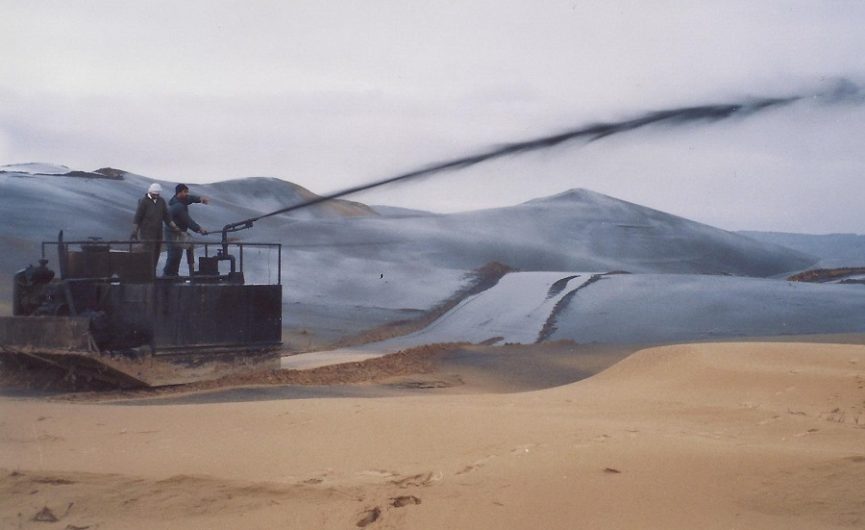
One of the applications of emulsion bitumen in the form of mulch is to stabilize flowing sand.